Quito, San Francisco ou Quito's real name, is the capital of Ecuador and the capital (Constitutional) the highest in the world.  Located at 2850 meters above sea level on the eastern slopes of Pichincha volcann, it extends from north to south for about thirty miles and now has nearly 2.2 million.
Roughly divided into two, the north is the modern part of the city and its focal point, while the south is home to the historic colonial center, declared Cultural Heritage of Humanity by UNESCO in 1978.
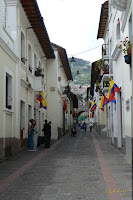 Although found in the northern city of many parks and shopping centers, it has few attractions if you're not in Quito for business. The architecture is modern, without unity and mainly composed of tall buildings. The main tourist interest lies at the south, where the colonial architecture is well development and well maintained. One of the finest examples of heritage preservation from Quito is the "Plaza Independencia", surrounded by the presidential palace and the town hall.
 The center also has many colonial churches, the main one being the "Basilica del Voto Nacional. Its construction lasted over 100 years and ended in 1988. Inspired by the Cathedral of Notre-Dame de Paris, one of its features is to have substituted the traditional gargoyles with species representative of the Ecuadorian fauna (turtles, monkeys, tapirs, crocodiles ...).
 It's nice to get lost in the small bustling streets of the center and come across a cosmopolitan population, a businessman in a suit and tie to women in traditional dress, through the young school uniforms ...
Nevertheless, it is not uncommon to be stopped by people who remind us that the city has a reputation for being dangerous, and warn of the dangers we face. Although l'ambiance générale nous ait paru très bonne, on ne rencontre quasiment plus personne dans les rues tombée à la nuit, et la vie nocturne est particulièrement pour une restreinte if large ville!
 Located at 2850 meters above sea level on the eastern slopes of Pichincha volcann, it extends from north to south for about thirty miles and now has nearly 2.2 million.
 Roughly divided into two, the north is the modern part of the city and its focal point, while the south is home to the historic colonial center, declared Cultural Heritage of Humanity by UNESCO in 1978.
 Although found in the northern city of many parks and shopping centers, it has few attractions if you're not in Quito for business. The architecture is modern, without unity and mainly composed of tall buildings. The main tourist interest lies at the south, where the colonial architecture is well development and well maintained. One of the finest examples of heritage preservation from Quito is the "Plaza Independencia", surrounded by the presidential palace and the town hall.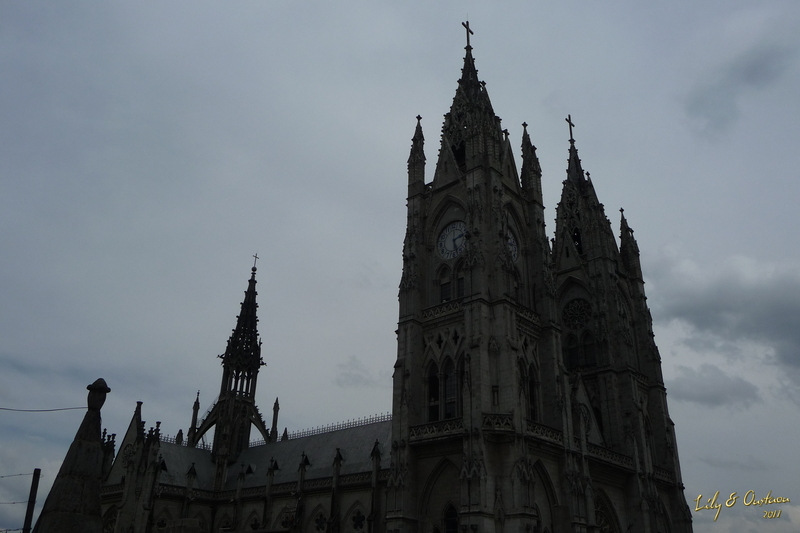
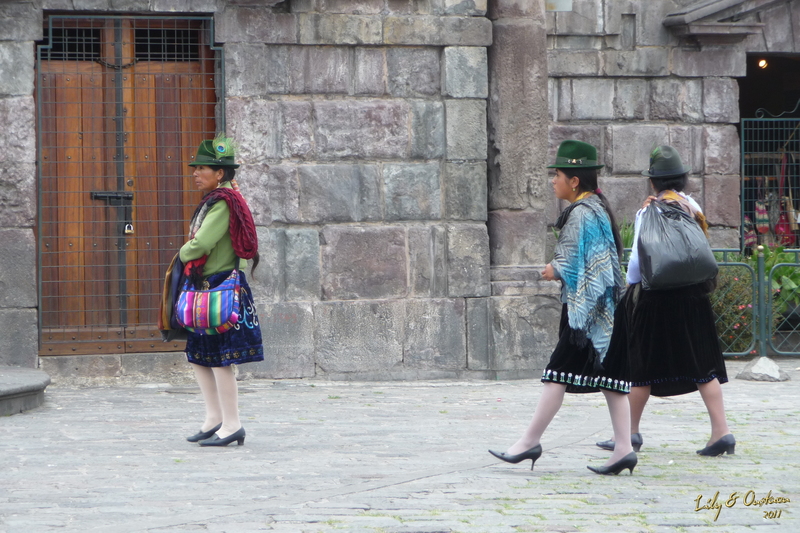 It's nice to get lost in the small bustling streets of the center and come across a cosmopolitan population, a businessman in a suit and tie to women in traditional dress, through the young school uniforms ...
 Nevertheless, it is not uncommon to be stopped by people who remind us that the city has a reputation for being dangerous, and warn of the dangers we face. Although l'ambiance générale nous ait paru très bonne, on ne rencontre quasiment plus personne dans les rues tombée à la nuit, et la vie nocturne est particulièrement pour une restreinte if large ville!
Quito or San Francisco de Quito of his real name, is the capital of Ecuador and the capital (constitutional) highest in the world. Located at 2850 meters, on the eastern slopes of Pichincha volcann, extends from north to south about thirty miles and currently has about 2.2 million people. Grossly
divided into two, the north is the modern part of town as well as its nerve center, while the south is the historic colonial center, cultural heritage site by UNESCO in 1978.
While in the north of the city are many parks and shopping malls, it has little appeal only if it is in Quito for business. The architecture is modern, with no unit and consists essentially large buildings. The main attractions are situated more in the south, where the colonial architecture is fully valued and very well maintained. One of the finest examples of preservation of the heritage of Quito's Independence Square, surrounded by the presidential palace and the town hall.
colonial center has also many churches, whose most important is the Basilica del Voto Nacional. Its construction lasted over 100 years and ended in 1988. Inspired by the Cathedral of Notre-Dame de Paris, one of its special features is to have replaced the traditional gargoyles representative species of the Ecuadorian fauna (turtles, monkeys, tapirs, crocodiles).
lost in the small lively streets of the center is very nice and there is a cosmopolitan population, businessmen in suits, ties, women in traditional clothing, young people in school uniforms ...
Nevertheless, it is not uncommon for people to summons him to a reminding that the city has a reputation for being dangerous and warning of dangers that lurk. Although the overall environment we have found very good, there is almost nobody in the streets after dark, and the nightlife is particularly limited for a city so big!
divided into two, the north is the modern part of town as well as its nerve center, while the south is the historic colonial center, cultural heritage site by UNESCO in 1978.
While in the north of the city are many parks and shopping malls, it has little appeal only if it is in Quito for business. The architecture is modern, with no unit and consists essentially large buildings. The main attractions are situated more in the south, where the colonial architecture is fully valued and very well maintained. One of the finest examples of preservation of the heritage of Quito's Independence Square, surrounded by the presidential palace and the town hall.
colonial center has also many churches, whose most important is the Basilica del Voto Nacional. Its construction lasted over 100 years and ended in 1988. Inspired by the Cathedral of Notre-Dame de Paris, one of its special features is to have replaced the traditional gargoyles representative species of the Ecuadorian fauna (turtles, monkeys, tapirs, crocodiles).
lost in the small lively streets of the center is very nice and there is a cosmopolitan population, businessmen in suits, ties, women in traditional clothing, young people in school uniforms ...
Nevertheless, it is not uncommon for people to summons him to a reminding that the city has a reputation for being dangerous and warning of dangers that lurk. Although the overall environment we have found very good, there is almost nobody in the streets after dark, and the nightlife is particularly limited for a city so big!


0 comments:
Post a Comment