Trujillo, a city of eternal spring 
Il ne nous
faut pas moins 4-bus différents et de 26 heures de route pour quitter l'Equateur et arriver à Trujillo, notre première étape péruvienne. Mais l'avantage of ces longs bus trajet est de pouvoir des paysages extraordinaires profiteer que l'on traverse, et c'est ainsi avoir passé qu'après the frontière de nuit, nous nous en plein désert réveillons, impressionnés par ce nouvel environnement .
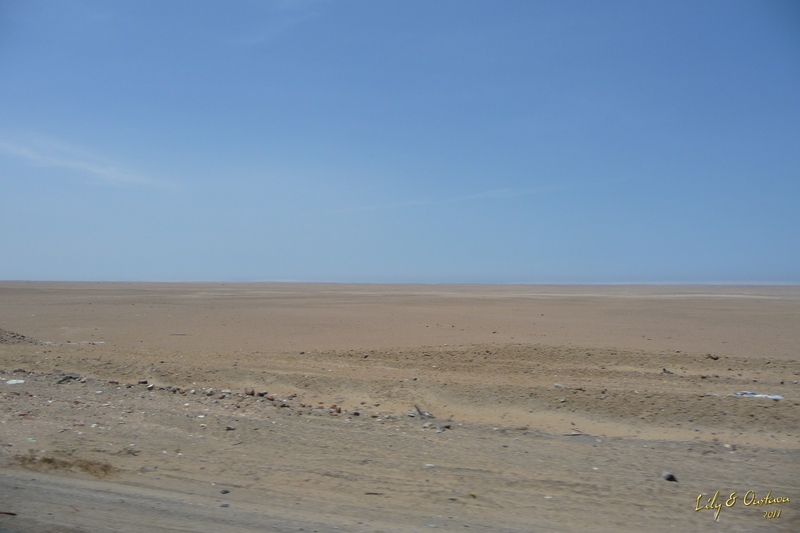
The heat outside is oppressive, almost unbearable, and now we're in the largest cities such oases Asked middle of nowhere. Surrounded by greenery, irrigation works wonders and can even grow rice in the desert!
We quickly understand that Peru is on the campaign trail because everywhere you look, whether on the slightest bit of wall or a rock, there are slogans and logos of the various parties policies. When there is enough room, the paintings even explain how to vote with, illiteracy requires, drawings support! Funny Surround ...
align ourselves finally Trujillo on the north coast of Peru, located a few kilometers from the Pacific Ocean. The center retains many traces of its colonial past, many buildings clearly show their European influence, but the main interest of the city lies in its two main archaeological Chan Chan, the largest adobe citadel of the ancient world and the Huaca del Sol and Luna, adobe pyramids. The
adobe clay that is mixed with water and a small amount of chopped straw or other binder, can be formed into bricks dried in the sun. It was the construction material used by pre-Columbian civilizations, here the "Chimu" and "Ugly."

The Chimu citadel of Chan Chan, declared a World Heritage Site by UNESCO in 1986, covers over 20 square kilometers. Therefore impossible to visit all, especially since a large proportion is now being restored. But the complex is accessible Nik Year, and we discover in the middle of its walls the importance of water and the ocean, and worship him who made the Chimu culture. Everywhere, high reliefs represent different species of marine animals in the region: fish, pelicans ... but the waves and fishing nets. Unfortunately, there are only few original performances as many have been destroyed due to heavy rains and flooding caused by the weather phenomenon El Niño on the Peruvian coast. Declared endangered heritage, Chan Chan may have disappeared in recent decades due to erosion, so the emphasis is now placed on the preservation and reconstruction of the site, even though searches continue !

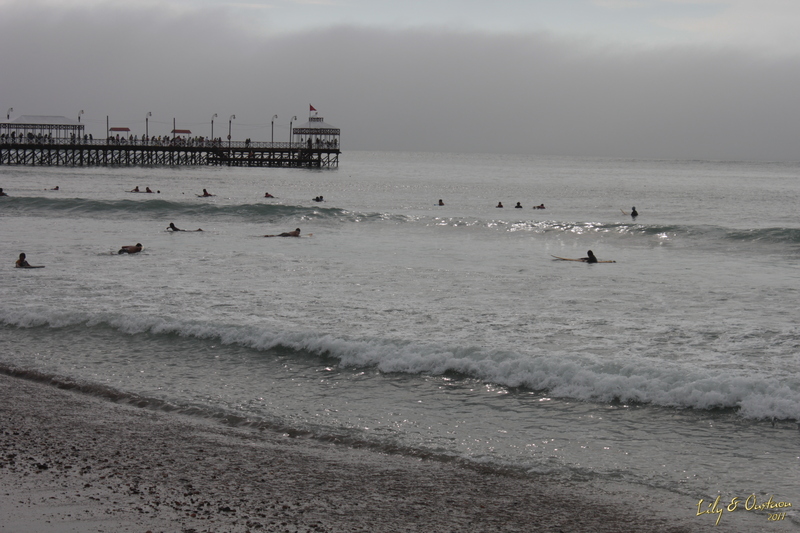
A few miles away on the Pacific, lies the fishing port of Huanchaco, which also serves as a seaside resort for the people of Trujillo. We put our bags for a few days to enjoy a little quiet (here no horn or alarm sounding continuously) and the weather. In this small village that reminds us a bit Capbreton, with its pier and surfers, life moves at idle and while "Trujillanos" land mass the weekend, the atmosphere is very relaxed. The police is patrolling up listening to reggae all the way into their patrol car, and many hippies strolling on the beach artisinat selling them. Here, fishermen out at sea with their boats

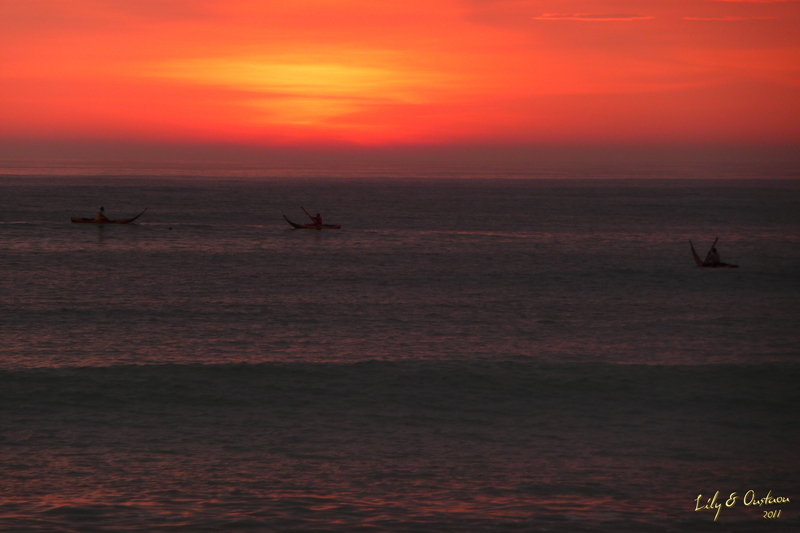
traditional "los caballitos totora", used for over 1000 years. Made Totora, a kind of reed local, their particular form found at the front and flat and enlarged at the rear is distinguished from all other boats.
Dominated by a small cliff, the place seems very nice to fly and do some soaring, but the wind is not strong enough during our stay and we will not get more than one minute flight!
Our No menos tocar diferentes of 4 nozzles and 26 hours of way out of Ecuador and reach Trujillo, Peru's our first step. But the advantage of those long bus journeys is to enjoy the extraordinary landscapes are facing, and so after passing the border at night, we woke up in the desert, impressed by this new environment. Outside
sweltering heat is almost unbearable, and we got to the first cities in the country, being surrounded by green oases appear in the middle of nowhere. Irrigation allows miracles and even grow rice in the desert!
quickly understand that Peru is in the process of election campaign because everywhere where to look, is about the smallest piece of wall or large stone, are the slogans and logos of political parties. We finally
Trujillo, a city on the north coast of Peru, located only a few miles of the Pacific Ocean. The center of the city retains many traces of its colonial past, many buildings are clearly of European influence, but the city's main interest lies in its two major archaeological poles: Chan Chan, the biggest mud citadel of the ancient world and Temples of the Sun and Moon pyramids of mud.
The mud is really more like clay which, mixed with water and a small amount of chopped straw, you can shape brick that are dried in the sun. Building material was used by pre-Columbian civilizations in this case the "Chimu" and "Mocha."
Chimu citadel of Chan Chan, declared World Heritage by UNESCO in 1986, covers over 20 km ². Therefore impossible to visit all, since a large part is now under restoration. An Nik But the complex is accessible, and found amid its walls the importance of water and the ocean, and the cult that was returned in the Chimu culture. Everywhere, the high reliefs representing the different animal species sailors in the region: fish, pelicans and networks but also waves fishing. Unfortunately, there are only few original representations because many have been destroyed because of heavy rains and floods caused by the weather phenomenon El Niño on the Peruvian coast. Declaring Heritage in Danger, Chan Chan may be gone in a few decades due to erosion, which is why the emphasis today is placed on the preservation and reconstruction of the site, while archaeological excavations continue!
A few miles away, the Pacific Rim, we found the fishing port of Huanchaco. We stopped there for a few days to enjoy a bit of calm (no speaker here or alarm to sound without interruption) and good weather. In this small town life flows slow and although many people of Trujillo come during the weekend, the atmosphere is very relaxed.
The police make their rounds at full volume listening to reggae in his patrol vehicle, and the many hippies wandering on the beach selling their crafts. Here, the fishermen go to sea with traditional boats, "the reed horses, used for over 1000 years. Made Totora, particularly as a front end tapered and curved upward, with the widest rear differs from all other models.
Dominated by a small slope, the place seems so nice to fly and do some soaring, but the wind did not have enough force during our stay and we will not get more than one minute flight!